
"seed funding"
500 article(s) found

What kind of coffee beans does Arabica coffee refer to? how to tell how many Arabica coffee beans are?
Professional coffee knowledge exchange more coffee bean information please follow the coffee workshop (Wechat official account cafe_style) "coffee variety" this kind of information is not easy to be noticed by coffee users in the early days, often engaged in roasters or players will be slightly concerned about, but will not be too in-depth, persistent, because the former is concerned about the price and sales channels; the latter focuses on the focus

History of introduction and expansion of Coffee in early China (5)
1. From the first peak period of the development of China's coffee industry (1952-1961) to the late 1940s, according to recorded figures, there are 2173.33 hectares of rubber plantations in Hainan Island, with a total of 867600 rubber trees, with an annual output of 199,000 tons of dry rubber, and more than 300,000 coffee plants. the annual output of coffee beans is 1 ton. According to a survey in the early 1950s, there was a large amount of coffee left in Fushan area of Chengmai County, with a total of 70,000.

A large number of entrepreneurs are approaching in the era of entrepreneurial coffee 2.0
Although the US capital market has issued a "tech bubble" warning, but the enthusiasm of domestic entrepreneurs is still heating up. After all, there is Facebook before, there is the myth of wealth creation such as Jumei Youpin, etc., this entrepreneurial wave called mobile Internet is really attractive.
The History of Coffee introduction and expansion in China in the early stage (5)
1. From the first peak period of the development of China's coffee industry (1952-1961) to the late 1940s, according to recorded figures, there are 2173.33 hectares of rubber plantations in Hainan Island, with a total of 867600 rubber trees, with an annual output of 199,000 tons of dry rubber, and more than 300,000 coffee plants. the annual output of coffee beans is 1 ton. According to a survey in the early 1950s, there was a large amount of coffee left in Fushan area of Chengmai County, with a total of 70,000.
On the expansion of Coffee in Yunnan
This time in Yunnan, I heard that some coffee growers have begun to cut down coffee trees. Before 2023, I called everywhere not to expand the species blindly, but now the high price must be hyped by some people, because the taste of our Yunnan coffee is far less good than that of others, such as Ethiopian coffee, but our price is far higher than that of others. Why? We do international coffee procurement.
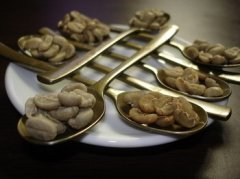
Know the varieties of Arabica coffee and the varieties evolved from Arabica
For professional baristas, please pay attention to the information of "coffee varieties" in the coffee workshop (Wechat official account cafe_style), which is not easy to be noticed by coffee users in the early days, and it is often the roasters or players who are slightly concerned about it, but they are not too deep and persistent, because the former is concerned with price and sales channels, while the latter focuses on the improvement of baking skills.
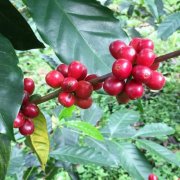
What varieties of arabica have evolved? KFC Arabica coffee beans refer to...
Professional coffee knowledge exchange More coffee bean information Please pay attention to coffee workshop (Weixin Official Accounts cafe_style) Arabica coffee varieties This information is not easy to be noticed by coffee users in the early stage, often engaged in roasting operators or players will be slightly concerned, but will not be overly deep, persistent, because the former is concerned about price and sales channels; the latter

Java coffee brand Koperasi java Java coffee how about Indonesian coffee beans
Professional coffee knowledge exchange more coffee bean information please follow the coffee workshop (Wechat official account cafe_style) Koperasi Surya Abada Kayumas (referred to as Kayumas) was established in 2008. The production members come from two different villages, Kayumas and Taman Dadar, mainly from the Javanese and Madura minorities. They currently have a total of 150 members, 59 of whom
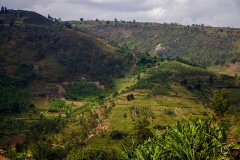
The best coffee in Rwanda the largest coffee cooperative in Rwanda-Nkara Musasha Cooperative
For the exchange of professional baristas, please pay attention to the coffee workshop (Wechat official account cafe_style) Rwanda Nkara Musasha Cooperative used to hold extraordinary cups (Rwandan Cup of Excellence) in Rwanda, after the interruption, there is now a new bidding system to replace, this coffee is from the latest batch. Nkala (Nkara) this coffee comes from northern Rwanda

A brief introduction to the characteristics of Costa Rican Coffee Flavor Wheel
A brief introduction to the characteristics of Costa Rican Coffee Flavor Wheel, with reference to the altitude of the producing area, according to the density of beans: SHB,strictly hard bean, very hard beans 3900 feet (about 1200m) GHB,good hard bean, hard beans 3300 feet (about 1000m) MHB,medium hard bean, medium beans 1600 feet (about 500m) usually, sea

Introduction of Rwanda Coffee Variety-Malaba Coffee beans
Rwandans have been growing coffee since colonial times, but until 1999, its products were still classified as below Class C and were not popular in the global market. The reason for the poor quality is that farmers do not have a fixed procedure for washing coffee beans and do not process coffee fruits according to specifications in time. Buyers buy coffee beans at $0.33 per kilogram, and farmers keep warm by the meagre profits earned at low prices.

Introduction to the taste description of Costa Rican coffee beans
In 1729, coffee was introduced to Costa Rica from Cuba. Today, its coffee industry is one of the well-organized industries in the world, with an output of 1700 kilograms per hectare. Costa Rica has only 3.5 million people but 400m coffee trees, and coffee exports account for 25 per cent of the country's total exports.

Where is the origin of Yemeni coffee?
Professional baristas exchange please follow the coffee workshop (Wechat official account cafe_style) Yemen is the world-famous hometown of coffee. Before the 6th century AD, Yemen was called Arab, so coffee trees shipped from Yemen to other places were also called Arabian coffee trees. But the origin of these trees is Ethiopia, and the Dutch spread the seeds of these coffee trees around the world.
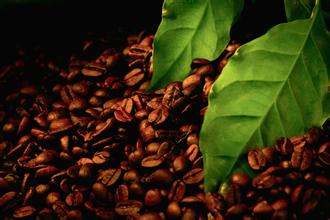
History of coffee in Rwanda
In 1999, 220 coffee growers formed guilds in the Malaba area (formerly part of Butare province) to address the disease. Among the guild members, many farmers were separated from their loved ones by the 1994 mass massacre, while some husbands were jailed or were taken to the traditional Gacaca Court (gacaca) to face trial on charges of participating in the massacre. They named the guild Abauza.

A brief introduction to the history and culture of the origin and development of boutique coffee beans in Incht Manor, Guatemala
At present, some of the best quality coffee from Guatemala is exported to Japan, where each cup of coffee sells for $3 to $4. In order to revitalize its coffee industry, Guatemala has specially set up a special coffee association and gives maximum funding and attention to these high-quality coffee. These efforts will soon bear fruit, and the real beneficiaries are not only coffee growers, but also coffee growers.

History of coffee in Rwanda
The Rwandans of origin have been growing coffee since colonial times, but until 1999, its products were still classified as below Class C and were not popular in the global market. The reason for the poor quality is that farmers do not have a fixed procedure for washing coffee beans and do not process coffee fruits according to specifications in time. Buyers buy coffee beans at $0.33 per kilogram, and farmers rely on the meagre profits earned at low prices.
The History of Coffee introduction and expansion in China in the early stage (2)
1. The presentation of the respective expressions and questions of Zhu Kula Coffee 1.1 I remember that it was still the spring of 1995, when Professor Mao Genhai of the former South China Hot farming Academy and I visited Xishuangbanna, Yunnan Province. I had the honor to see the review and prospect of Yunnan coffee development published in the third issue of Tropical crop Science and Technology in 1994 by Huang Junxiong and Zhang Xingcan, Institute of Tropical and Subtropical Economic crops, Yunnan Academy of Agricultural Sciences
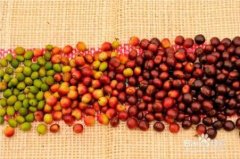
Costa Rican Coffee Bean hand Chong taste and flavor describe the planting environment in the producing area
Costa Rican coffee beans taste flavor description of the growing environment Costa Rican coffee is full of particles, unique and strong flavor, can grow above 1500 meters above sea level. High-quality Costa Rican coffee is called extra hard beans. High altitude can increase the acidity of coffee beans and thus increase the flavor, and the cooling at night can slow down the growth of trees, thus making coffee beans more flavor.

The respective expressions and questions of the introduction years of Zhukula Coffee in Chinese Coffee Culture
1.1 I remember that it was still the spring of 1995, when Professor Mao Genhai of the former South China Hot farming Academy and I went to Xishuangbanna, Yunnan Province. I had the honor to see Huang Junxiong and Zhang Xingcan, Institute of Tropical and Subtropical Coffee, Yunnan Academy of Agricultural Sciences, published a paper on the development of Yunnan coffee in 1994 in the third issue of Tropical crop Science and Technology, from which we got the information about the earliest introduction of Yunnan coffee.
History of Coffee planting in the early stage of Coffee introduction and expansion in China (2)
1. The presentation of the respective expressions and questions of Zhu Kula Coffee 1.1 I remember that it was still the spring of 1995, when Professor Mao Genhai of the former South China Hot farming Academy and I visited Xishuangbanna, Yunnan Province. I had the honor to see the review and prospect of Yunnan coffee development published in the third issue of Tropical crop Science and Technology in 1994 by Huang Junxiong and Zhang Xingcan, Institute of Tropical and Subtropical Economic crops, Yunnan Academy of Agricultural Sciences